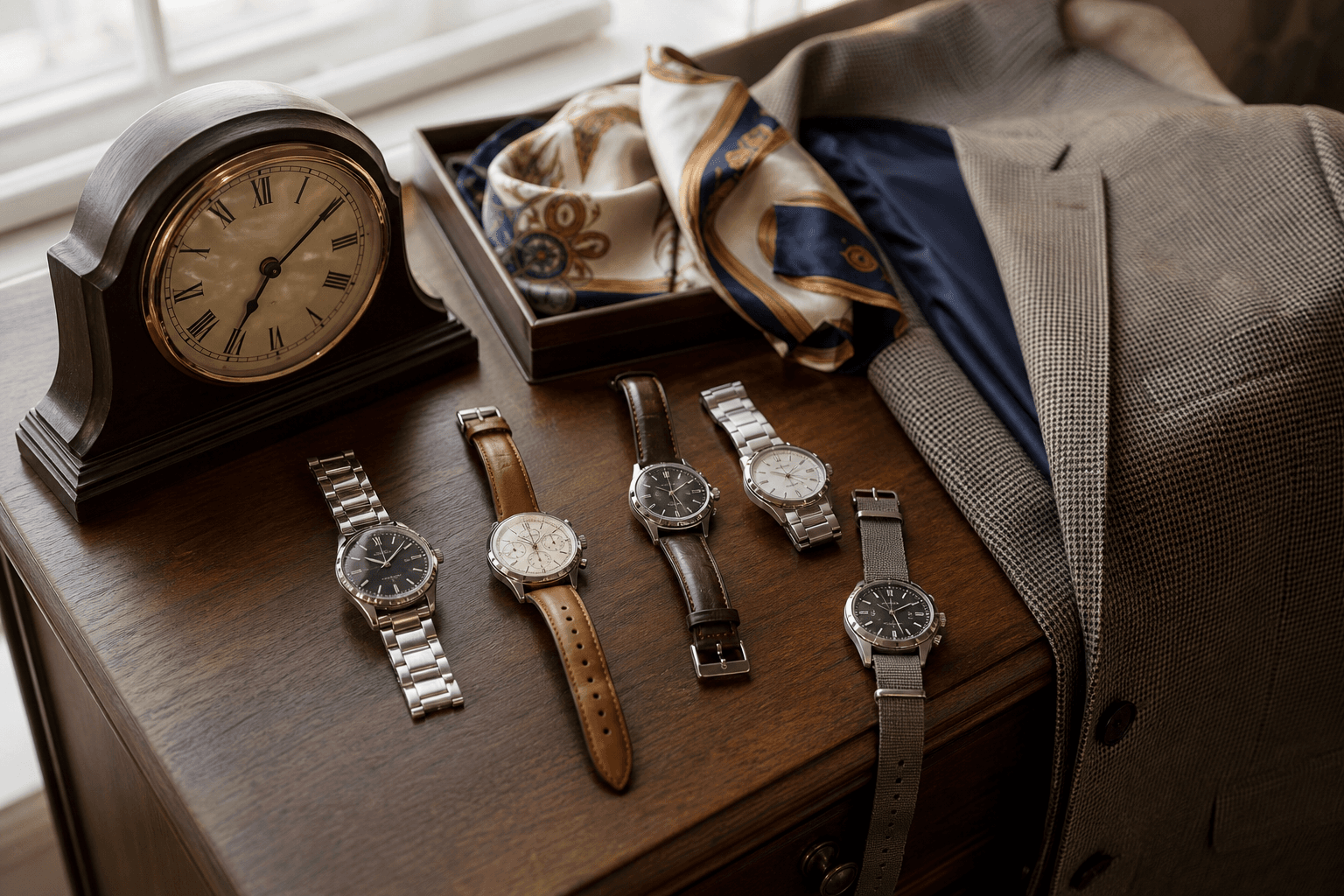
Why timepieces matter today
In apparel and fashion, accessories are the quiet detail that completes an outfit, and few pieces do that as reliably as a well-chosen watch or a thoughtfully placed home clock. Beyond telling the hour, timekeepers project taste, support daily routines, and connect personal style with practical function. Whether you’re dressing for the office, setting a weekend pace, or coordinating a living space, the right timepiece offers an immediate, wearable or displayable expression of who you are. The challenge, of course, is the abundance of choice. Classic dress watches, versatile everyday designs, bold sports styles, and refined mantel or wall clocks each serve slightly different needs. Understanding how case size, movement type, materials, and features align with your lifestyle will make browsing and buying far simpler. Retailers like timepiecesusa.com bring these options together so you can compare styles and specifications side by side. If your priority is polish at a work meeting, you might gravitate toward slim, minimalist dials that slide under a cuff. If your calendar leans casual, a watch with durable materials, a readable dial, and quick-change straps can move from gym to brunch smoothly. For the home, clocks can become focal points—think a quiet-sweep wall clock in a study to keep concentration or a mantel clock in a living room to anchor a shelf display with proportion and warmth. Yet aesthetics are only part of the story. There’s long-term wear comfort, which depends on case size, thickness, and curvature; there’s durability, shaped by crystal and case materials; and there’s ongoing care, determined by whether you prefer the simplicity of quartz or the charm of mechanical movement. Knowing the basics before you shop will help you navigate product pages with confidence and filter to the models that truly fit. This article outlines those essentials, shares practical examples, and offers next steps to streamline your selection so your final choice feels intentional—on the wrist or on the wall.
Features to weigh carefully
Start with fit and proportion. Case diameter is a helpful guide, but it’s only part of the equation; lug-to-lug distance (the length from one strap connection to the other) and case thickness affect how a watch sits on the wrist. Measure your wrist circumference and compare it with product dimensions, aiming for a balanced overhang-free fit. Next, consider movements. Quartz watches are battery-powered and typically low maintenance with high accuracy. Automatic (self-winding) or hand-wound mechanical movements offer tactile appeal and craftsmanship; they may require periodic regulation and more attentive care. Solar-assisted quartz options blend convenience with extended time between battery services. Materials influence both longevity and appearance. For the crystal, mineral is common and budget-friendly; sapphire provides stronger scratch resistance and long-term clarity. Stainless steel cases are durable and easy to maintain, while plated or coated finishes offer distinctive looks—just review care guidance to preserve them. For straps, leather brings classic style and comfort, metal bracelets add durability and polish, and silicone or nylon offer resilience and easy cleaning. Quick-release spring bars make seasonal or outfit-based swaps simple. Water resistance matters even for non-swimmers; ratings like 30 m, 50 m, or 100 m indicate tolerance to splashes, handwashing, or more active use. Always match intended use to the stated rating and follow the manufacturer’s guidance. Dial design affects legibility in all light. Contrast between hands and markers, clear minute tracks, and non-reflective finishes improve readability; luminescent accents support low-light checks. Complications—date windows, day-date, chronographs, dual time zones, or moonphase—add utility, but prioritize clarity over clutter. Home clocks bring a different set of choices. Silent sweep movements reduce distracting ticks in bedrooms or offices; larger numerals and high-contrast hands aid quick reading from across a room; chime functions can add character but should be adjustable or have a night-silence option. Mounting hardware, battery type, and placement flexibility also matter. As you compare options on retailer product pages, look for detailed specifications, close-up photos, and straightforward returns information so you can shop with comfort. When browsing collections online, it can be helpful to click through to a model’s gallery and see features like clasp type, caseback design, or lume shots to understand day-to-night wear.
From shortlist to purchase
Turn research into a focused plan by listing what truly matters for your routine. If you type throughout the day, a low-profile case that won’t catch on sleeves is practical. If you commute on foot, favor water resistance and a durable strap. For travel, a GMT or dual-time function can help you track home and destination time zones at a glance. Rank your top three requirements—fit, readability, and versatility are strong starting points—then set a realistic budget band. With a direction in mind, create a shortlist of three to five models that vary slightly in style or features so you can compare trade-offs. When exploring watches and clocks at timepiecesusa.com, keep a note of case size, thickness, lug-to-lug, strap width, and weight; this specification set quickly reveals comfort and presence. Save product photos to see how each piece would pair with your wardrobe or interior palette. Neutrals and metallics tend to coordinate broadly, while a single accent color—on a seconds hand or dial—can add personality without overwhelming outfits or decor. Don’t overlook care and longevity. Plan for occasional strap replacements to refresh style, and follow simple maintenance practices: wipe down metal and leather after wear, keep leather away from moisture, avoid magnets with mechanical movements, and change batteries promptly in quartz pieces to prevent leakage. For home clocks with chimes, review setup steps and scheduling features to align with your space. Finally, read user reviews for clues about real-world comfort, accuracy, and build quality, and check the return policy timing before you buy. When you’re ready, you can proceed through the retailer’s catalog and, if needed, revisit specifications or sizing guidance on the official site to confirm details. A deliberate approach—anchored in fit, function, and style—will help ensure your new timepiece feels like a natural extension of your day and your space.
Key points and next steps
Watches and clocks bridge style and utility, and a little preparation goes a long way toward finding the right match. Begin with the basics: wrist measurements, intended use, and a budget band. Then weigh the trade-offs among movements, materials, water resistance, and legibility. For the home, balance quiet operation, visibility from a distance, and placement options. As you compare models, focus on clear specifications and close-up images so you can assess finishing details, case thickness, strap changes, and dial clarity. Give extra attention to wear comfort and proportion; a watch that fits well is the one you will reach for most. Think about maintenance too—simple habits like gentle cleaning and timely battery service preserve appearance and performance. When a shortlist emerges, review return windows and user feedback to round out your decision. Retailers such as timepiecesusa.com offer a range of styles and formats, helping you align taste with everyday practicality. With this framework, you can move from browsing to confident selection, choosing a piece that complements your wardrobe or interior and supports the rhythms of your day.