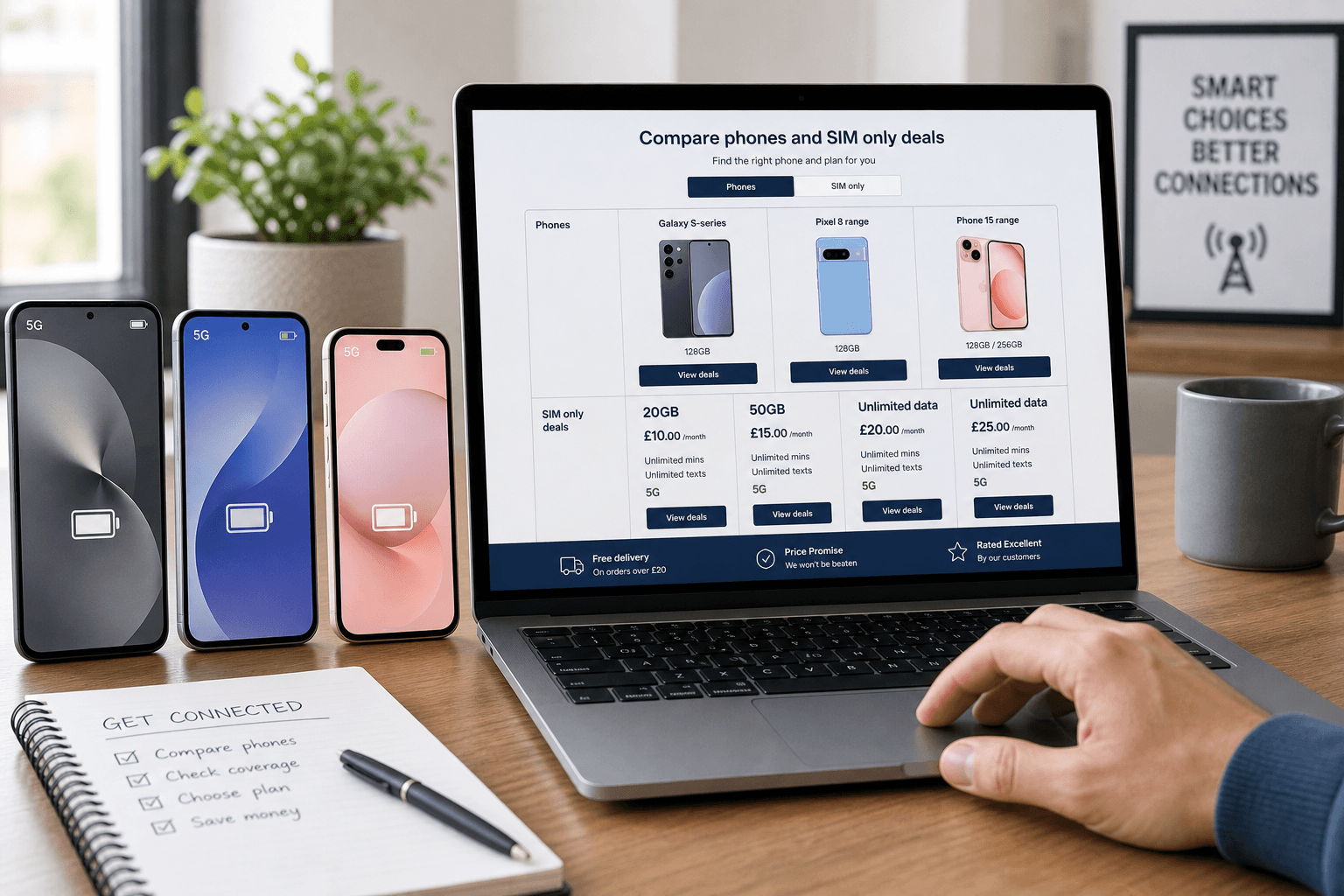
Why phone choice matters
In the electronics and appliances category, few purchases work harder every day than a smartphone. It is your camera, navigator, boarding pass, wallet, and entertainment hub—yet with hundreds of models and plans to sift through, choosing the right combination can feel overwhelming. The challenge usually isn’t a lack of great options; it’s working out which device features genuinely suit your life, which tariff fits your usage, and how to balance upfront versus monthly costs. That’s where a little structured thinking—and a reliable place to compare—can make all the difference. Retailers like www.mobiles.co.uk bring multiple networks, phone makers, and contract types together, so you can filter by what actually matters to you rather than getting lost in marketing terms. Before you look at screen sizes and camera specs, it helps to define your practical needs. Consider where your phone earns its keep: do you rely on it for work calls and tethering, or is it mainly for social, maps, and pictures? If you stream a lot of video, a generous data allowance and a larger display might move up your priority list. If you travel, check roaming provisions and whether eSIM support would make switching easier. And if you take a lot of photos, you might value optical image stabilization and a brighter main lens over having multiple auxiliary sensors. Then there’s how you pay. SIM-free buying gives you full ownership from day one and flexibility to move between SIM-only plans, but it requires a higher upfront budget. A monthly contract spreads device cost over time, often bundling extras like data allowances and accessories, while SIM-only lets you keep a current phone and lower your monthly outgoings. Each pathway can make sense; the right one depends on how long you typically keep your phone, whether you’re open to refurbished models, and whether you have a device to trade in. This guide lays out the features and fees worth understanding, plus a simple process to narrow choices without second-guessing. You’ll learn how to check coverage where you live and work, estimate your actual data needs, and decide whether to prioritize battery life, camera performance, or long-term software support. Along the way, we’ll point to practical tools and retailers such as www.mobiles.co.uk that help you compare like for like so you can buy with confidence.
Key features and costs
Start with the display, because you’ll interact with it all day. A 6.1–6.7 inch screen is the modern sweet spot, though smaller sizes suit one-handed use. Higher refresh rates (90–120 Hz) can make scrolling feel smoother, while OLED panels typically offer deeper contrast than LCDs. If you read in bright sunlight, a screen with higher peak brightness may be worth prioritizing. Performance depends on the processor, RAM, and software optimization. Flagship chipsets excel at gaming and video editing, but midrange processors have become very capable for daily tasks. Storage matters more than many expect: photos, offline playlists, and 4K video add up fast, so consider 128 GB as a comfortable baseline if you shoot lots of media and don’t regularly offload to the cloud. Battery life is shaped by capacity, display efficiency, and your usage patterns. A larger battery doesn’t always guarantee longer runtime, so look at real-world endurance tests where possible. Fast charging is convenient, but standards vary; if you keep devices for several years, a balanced approach that avoids constant high-watt charging can help preserve long-term health of the battery. Wireless charging is useful for desk or bedside convenience, and reverse wireless charging can top up earbuds in a pinch. Cameras are not just about megapixels. Lens quality, sensor size, optical image stabilization, and computational photography all matter. If you want consistent portraits and low-light shots, prioritize stabilized main sensors and reliable processing over a long list of secondary lenses. For creators, look for 4K video options, good microphone performance, and stabilization modes. Connectivity features like 5G, Wi‑Fi 6/6E/7, Bluetooth codecs, and eSIM/dual SIM can shape your day-to-day experience. If you tether a laptop or stream a lot, advanced Wi‑Fi support and strong 5G bands in your area can pay dividends. Durability also counts: an IP rating for water and dust resistance, and toughened glass, can help your phone withstand daily knocks. Software support is a long-term value factor. Check the manufacturer’s policy on OS and security updates, especially if you plan to keep your phone for three to five years. Accessibility features, privacy controls, and parental tools can also be decisive for families. On costs, look beyond the headline monthly price. Consider total cost of ownership: upfront fee, monthly payments over the contract term, any device credits, and potential trade-in value. If you are comparing to SIM-free plus SIM-only, tally the sum over the same time frame. Promotions can change quickly, so when you are ready to assess real-world prices, it helps to use a trusted comparison route to explore offers across networks and memory sizes. You may also see refurbished options that cut costs and environmental impact; reputable retailers test and grade devices, and clearly state condition and warranty. Finally, check roaming terms, hotspot limits, and any fair usage policies if you travel, so your plan fits your habits without surprises. Retailers such as www.mobiles.co.uk clearly present these details, making it easier to spot the best fit for your budget and priorities.
Smart steps before checkout
Turn research into a decision with a simple sequence. First, list your top three priorities—perhaps battery life, compact size, and reliable camera. This keeps you focused when comparing phones that all look good on paper. Second, test coverage where it counts. Night-and-day performance differences often come down to network strength at home, the office, and your commute. Use provider coverage tools, and if possible, ask friends or colleagues on different networks about their real experiences in those locations. Third, estimate your data needs using your current phone’s usage statistics. If you average 12 GB per month, consider a plan that gives you comfortable headroom—say, 20–30 GB—to cover navigation, video calls, and occasional streaming on the go. Heavy streamers or frequent tethering users may want larger allowances or uncapped plans; casual users might favor lower-cost, moderate data bundles. Fourth, tally the total cost of ownership. Write down upfront, monthly, and any add-ons over the full term, then compare to a SIM-free purchase plus a SIM-only plan over the same horizon. This reveals which route is genuinely better value for your situation. If you have a device to trade in, back it up, unpair wearables, and check its condition honestly to avoid revised offers later. Timing your purchase can also help: prices often shift around major launches, seasonal events, and network promotions. If you prefer predictable payments, longer terms can reduce the monthly figure, but note that shorter contracts may give you flexibility to upgrade sooner. Always read the small print on out-of-allowance charges and early termination fees. Before switching, confirm whether your number can be ported and request a PAC code from your current provider if you are in the UK. Keep an eye on return windows and cooling-off periods; testing a new phone’s camera, battery endurance, and call quality in your daily routine is the best way to confirm you chose well. When it’s time to pull the trigger, a consolidated retailer lets you weigh multiple networks and storage options side by side; you can use a trusted store to compare plans quickly without hopping between tabs. After checkout, set up securely. Transfer your data, enable a screen lock and biometric unlock, and turn on automatic backups. Consider a durable case and screen protector while you’re at it. If you share devices with family, explore built-in parental controls and location sharing thoughtfully, and if you prioritize sustainability, look into manufacturer repair programs and spare-part availability. Throughout, keep notes on what you value most; the next time you upgrade through a retailer like www.mobiles.co.uk, you’ll be able to zero in on the right match even faster.
Recap and next move
The easiest path to the right phone-and-plan pairing is a calm, methodical approach. Start by defining what you truly value—display size and smoothness, dependable camera performance, strong battery life, or long-term software support. Check the network experience in the places you live and work, and estimate your real data needs from your current usage. Then compare total ownership cost across SIM-free plus SIM-only and pay-monthly contracts, remembering to factor in trade-in value, roaming terms, and any fair usage policies. When you narrow choices to a handful of models, read clear, like-for-like breakdowns of storage tiers, color options, and tariffs, and use return windows to confirm that the device suits your daily routines. Retailers such as www.mobiles.co.uk can simplify the process by presenting multiple manufacturers and networks under one roof, making it easier to see which combination aligns with your budget and priorities. With these steps, you avoid impulse decisions and end up with a phone that fits your lifestyle—without overpaying for features you’ll never use. If you keep your notes for the next upgrade cycle, the process becomes even more straightforward, so you can revisit your preferences and move confidently when the time is right.