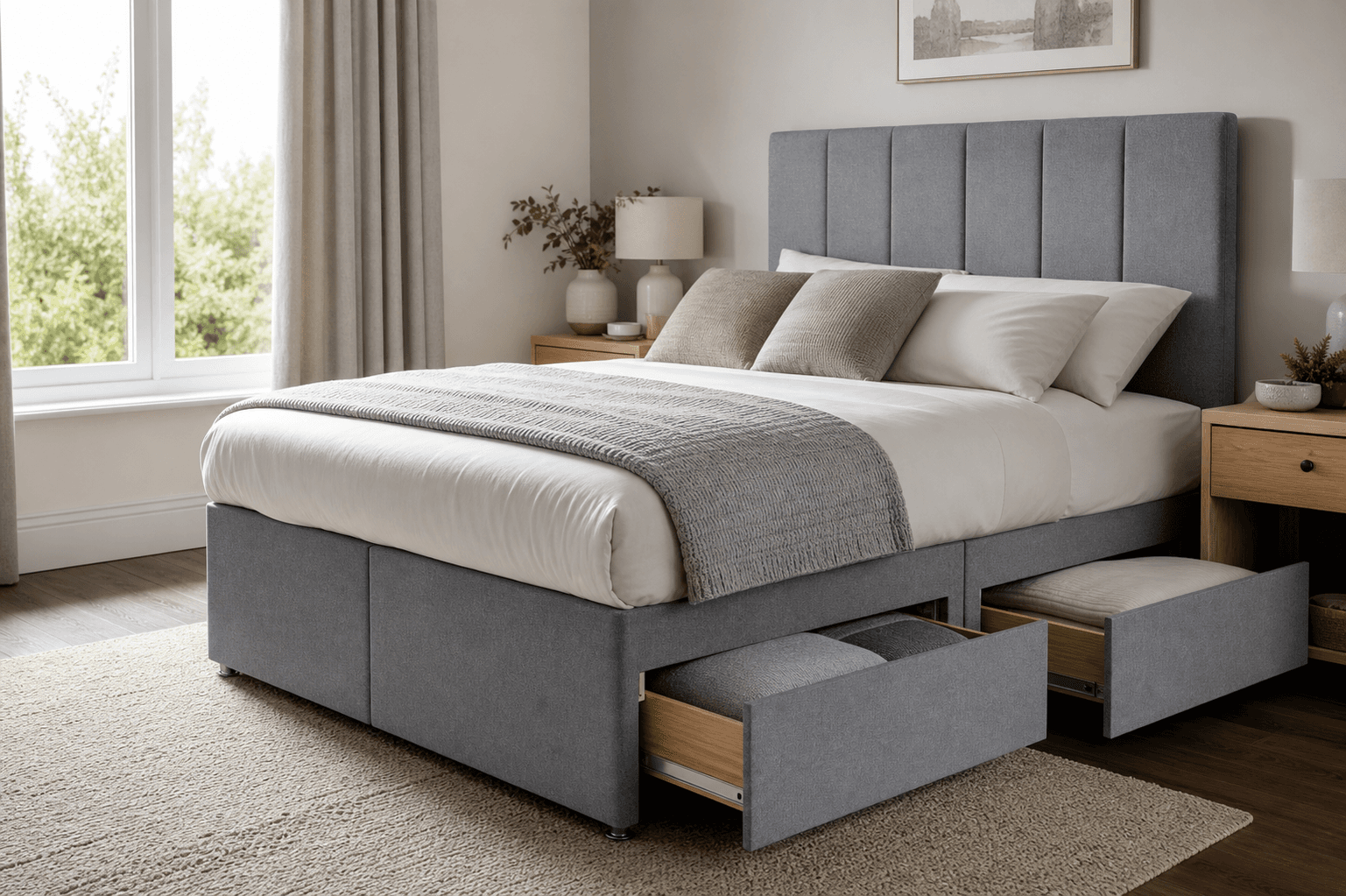
Why divan beds matter
In the home and garden category, bedroom furniture is one of the most influential choices you can make for comfort, space efficiency, and overall look. Among the many bed types available in the UK, the divan bed remains a practical, versatile staple because it combines a supportive base with discreet storage options and a tailored, upholstered finish. Rather than a slatted wooden frame, a divan base is typically a robust timber structure that is fabric-covered and designed to partner seamlessly with a mattress. That design helps many households, from compact flats to larger family homes, balance a tidy aesthetic with everyday practicality. Space is at a premium in many British bedrooms, and that is where a divan can excel. Bases can be specified with drawers or an ottoman lift to store spare bedding, seasonal clothes, or even children’s toys, bringing order to the room without requiring extra furniture. The low visual profile and wide range of fabrics—from hard-wearing neutrals to textured weaves—also make it easy to coordinate with curtains, paint colours, and floor coverings. For renters or anyone likely to move, the split-base format and simple caster or glide feet make transport and assembly straightforward. For homeowners, the potential to attach a headboard allows you to refresh your bedroom’s style in the future without replacing the full base. Choosing a divan is not only about storage. The base you pick affects how the mattress feels under your body. A platform-top (solid) base often provides a slightly firmer feel, while a sprung-edge base can yield a touch more comfort and pressure diffusion. These nuanced differences can help you fine-tune your sleep surface to match your preferences. As you explore collections—whether focusing on classic two-drawer designs or modern ottoman formats—consider browsing ranges from a specialist retailer such as divancentre.co.uk to compare materials, sizes, and finishes in one place. By understanding how a divan base integrates storage, support, and style, you can better align your next bed with the way you actually use your room each day.
Key features and options
A well-chosen divan blends three core decisions: size, storage configuration, and base construction. Start with size because it defines both your sleep surface and the room’s circulation. UK sizes commonly include Small Single (2'6"/75 cm x 190 cm), Single (3'0"/90 cm x 190 cm), Small Double (4'0"/120 cm x 190 cm), Double (4'6"/135 cm x 190 cm), King (5'0"/150 cm x 200 cm), and Super King (6'0"/180 cm x 200 cm). Before you commit, measure doorways, staircases, and tight turns to ensure the base can be delivered easily. Many bases arrive in two split sections from Double upwards, which helps with access—check the product description for how a specific model is split. Next, consider storage. Drawer configurations vary, including two-drawer (often one each side near the foot), four-drawer, and the popular continental option where shorter drawers at the head end avoid bedside tables. An ottoman divan, lifted via gas struts from the foot end or side, unlocks the largest single storage cavity and is helpful for bulky items like winter duvets. If you choose drawers, think about their internal dimensions and weight limits; if ottoman, confirm the lift mechanism’s rating and mattress compatibility. Casters offer easy manoeuvrability, while glides provide more stability on hard floors. A protective baseboard in drawers and a dust-shield for ottomans are small details that help keep items clean over time. Base construction influences comfort subtly but meaningfully. Platform-top bases provide a stable, uniform feel ideal for those who prefer a little extra firmness or who use heavier mattresses. Sprung-edge bases introduce a layer of springs within the top, softening initial contact and smoothing pressure across the mattress surface. Whichever you pick, ensure the base is compatible with your mattress type (open-coil, pocket-sprung, latex, or foam) and check any care guidance regarding rotation. Finally, style the bed with a compatible headboard—strutted or floor-standing—checking bolt spacing and fixing method for a perfect fit. Swatch samples can help you confirm colours in different lighting. To streamline comparison shopping across fabrics, storage layouts, and base types, you can browse ranges and see features side by side before you decide.
How to choose confidently
Turn your short list into a confident purchase by mapping your room and daily habits to the features that matter most. Begin with a floor plan: note radiator positions, wardrobe doors, and walking paths so you can choose the largest suitable bed without crowding access. If you rely on under-bed storage, decide whether you prefer fast access to frequently used items via drawers or the greater capacity of an ottoman for bulky, occasional-use objects. Bedrooms with tight side access can benefit from a foot-end ottoman, while wider rooms may suit a side-lift ottoman that opens toward clear space. Think in systems rather than parts. A supportive platform-top base can firm up a plush mattress, while a sprung-edge base can add a touch of give to a firmer mattress—together, they create your overall feel. If you already own a mattress you love, match the base to protect that feel; if you are replacing both, audition combinations in-store when possible, or look for clear product descriptions that spell out how the base influences comfort. Headboards contribute both ergonomics and design; a generously padded, taller headboard can improve seated comfort for reading, while a compact, horizontal design keeps a minimalist look. Practicalities matter on delivery day. Check whether the base splits, how it is secured with link bars, and whether feet or castors need attaching. Measure staircase corners and loft hatches if relevant. After setup, add a breathable mattress protector to help with hygiene and rotate your mattress as recommended by its manufacturer. Keep drawers lightly loaded to preserve smooth running, and if using an ottoman, lift with two hands and stow heavier items nearer the hinge side to balance the mechanism. Fabric care is simple: spot-clean gently and vacuum the base skirt occasionally to remove dust. Revisit your budget with lifetime value in mind. A sturdy, well-specified divan can consolidate storage, reduce visual clutter, and extend the functional life of a compatible mattress. If you want to compare multiple finishes and configurations in one place, explore specialist retailers. For convenient browsing of coordinated bases, headboards, and sizes with clear specification details, visit the official site for divancentre.co.uk and build a shortlist that fits your room, routine, and preferred sleep feel.
Recap and buying checklist
A divan bed brings together storage, support, and style in a compact footprint, making it a smart option for many UK bedrooms. Start by choosing the right size for both sleepers and space, then decide how you will use integrated storage—drawers for quick access or an ottoman for maximum capacity. Align base type with your mattress: platform-top for a firmer, uniform feel or sprung-edge for a touch of cushioning. Confirm delivery logistics, including base splits and access routes, and think ahead about headboard height and fabric choices to complement your room. From everyday tidiness to long-term comfort, the most satisfying results come from thinking holistically about how the base, mattress, and headboard work together. Measure carefully, check specifications for drawer dimensions or ottoman lift ratings, and request fabric swatches when possible to ensure colour confidence in your lighting. Build in simple aftercare—occasional vacuuming of the base fabric, mindful loading of storage, and routine mattress rotation—to keep everything performing well. With a grounded plan and a clear view of your priorities, you can select a divan configuration that feels tailored to your home, drawing on the wide variety of sizes, finishes, and practical features available from retailers such as divancentre.co.uk.