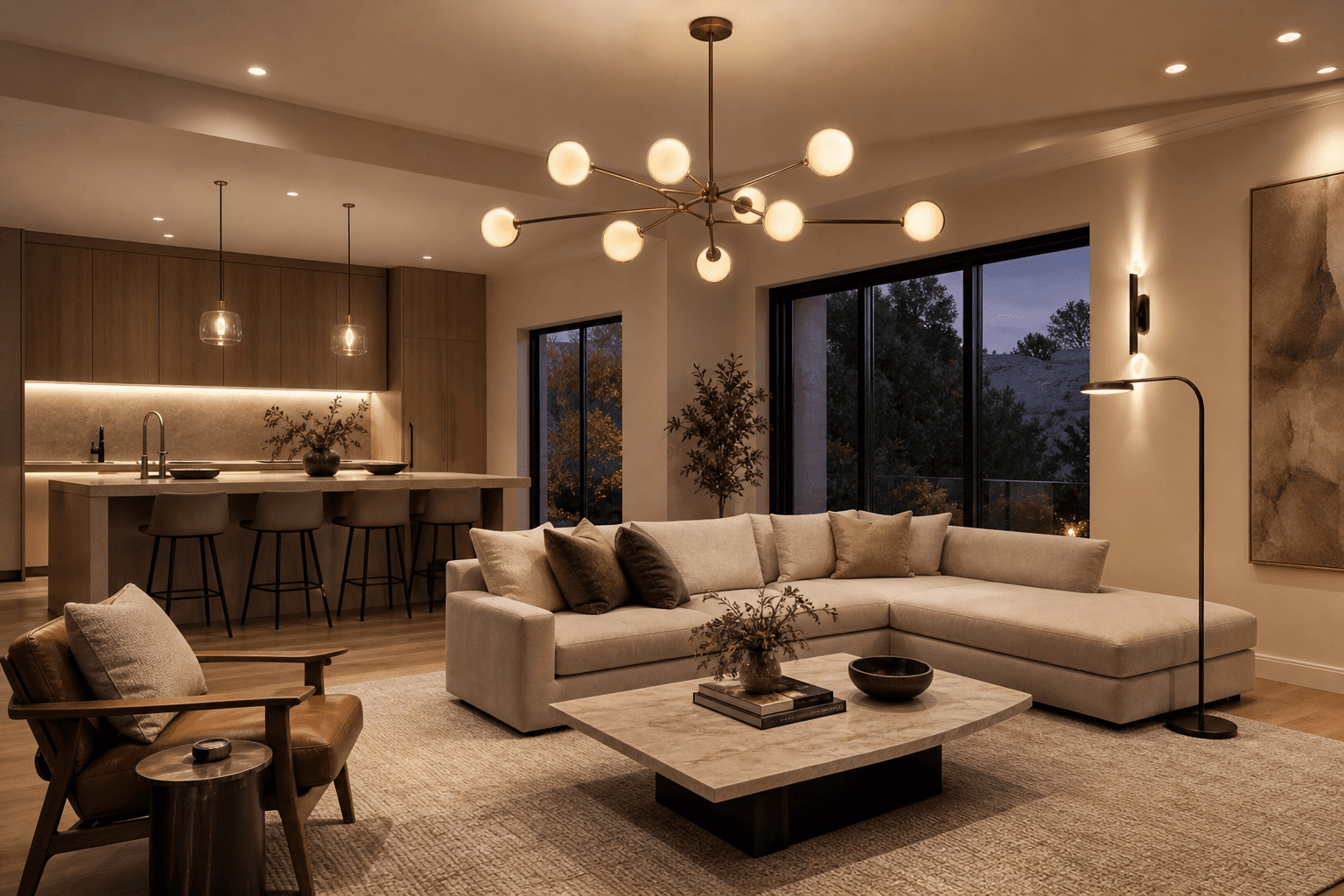
Why layered lighting matters
Thoughtful lighting is one of the most effective ways to transform how a home looks and feels. In the home and garden context, the right plan softens glare, flattens harsh shadows, makes colors more accurate, and helps each room perform better for everyday tasks. Many households rely on a single overhead fixture, only to discover that it leaves corners dim, tabletops unevenly lit, and eyes fatigued by the end of the day. A more complete approach—a layered scheme—combines ambient, task, and accent light to create balanced illumination that adapts to different moments. Ambient light provides overall brightness. Task light targets specific activities like cooking, reading, or grooming. Accent light adds depth, draws attention to art or architecture, and creates a welcoming mood at night. Modern fixtures and LED sources make this easier than ever by offering reliable output, dimming, and tunable color options. Whether you prefer sculptural pendants, barely-there recessed fixtures, or textural wall sconces, the market spans contemporary to classic looks. Retailers such as lumens.com curate a broad range of styles and technical specifications, making it simpler to compare fixture sizes, finishes, bulb types, and control options in one place. If you’re beginning to outline a plan or replacing older fixtures, it can be helpful to browse curated collections at lumens.com to see how different categories work together. As you evaluate options, keep context in mind: room size, ceiling height, and natural light strongly influence your choices. For low ceilings, flush or semi-flush mounts can distribute light evenly without crowding the space. In tall rooms, pendants and chandeliers can visually anchor seating or dining areas while pulling light down to where it’s needed. For color quality, LEDs with a high color rendering index (CRI 90+ is a strong target) help fabrics, wood tones, food, and skin tones look natural. Warm white in the 2700K–3000K range generally feels comfortable in living spaces, while slightly cooler neutrals can suit work zones. Finally, plan for control. Even basic dimmers expand the usefulness of a room, letting you tune brightness for movie night, morning prep, or evening reading. Smart switches and bulbs can further streamline scenes, but compatibility with drivers and dimmers is key. In short, a layered approach, guided by scale and specification, is the most reliable route to comfortable, adaptable lighting throughout the home.
Fixture choices and room tips
Once you embrace layers, the next step is mapping them to real rooms. In living rooms, start with soft ambient light—recessed downlights, a central flush mount, or a statement chandelier—and add two to three task sources, such as a floor lamp for reading, a table lamp beside a sofa, or adjustable wall sconces. Aim to wash walls and illuminate corners: light at the room’s edges makes the space feel larger and more inviting. Kitchens benefit from clear task illumination. Pendants or a linear fixture over an island can supply focused brightness while recessed downlights or a surface mount provide overall light. Under-cabinet LED strips or pucks reduce shadows on counters; look for continuous diffusion to avoid hotspots on glossy backsplashes. Dimming lets you go from cooking mode to a softer, social atmosphere. Dining rooms typically center on a chandelier or multi-light pendant hung so the bottom sits roughly at eye level when seated—often in the 30–36 inch range above the tabletop, depending on ceiling height and fixture scale. Supplement with wall sconces or nearby buffet lamps to deepen the scene and reduce contrast. In bedrooms, combine a quiet ambient source with bedside task lighting. Swing-arm sconces save nightstand space and control glare better than tall shades. Consider warmer color temperatures for winding down at night. Bathrooms call for even, shadow-free light at the mirror; vertical sconces flanking the vanity often provide more flattering illumination than a single overhead bar. For showers or above-bath zones, ensure fixtures are appropriately rated for damp or wet locations. Home offices need comfortable task light that avoids screen glare; pair diffuse overhead light with a desk lamp featuring a directional head and a neutral-white LED for focus. Hallways and stairs rely on uniform, safe illumination—semi-flush mounts, compact sconces, and low-level step lights can work together to guide movement without overpowering adjacent rooms. Outdoors, coordinate path lights, porch lanterns, and downlights to improve safety and extend usable hours; verify wet ratings for exposed areas and use warmer tones for a relaxed look. As you explore categories—pendants, chandeliers, sconces, flush mounts, track, monorail, and portable lamps—pay attention to scale, mounting height, and finish harmony with existing hardware. If you want to compare fixture families that share finishes and proportions, you can explore offers curated by function and style, which makes it easier to assemble a cohesive plan across multiple rooms. Finally, evaluate LED details: look for consistent color temperature across rooms to avoid mismatched glows, and choose high-CRI light for true-to-life colors in kitchens, closets, and bath areas where accuracy matters.
Planning, specs, and installation
Turning ideas into a working plan is easier if you move step by step. Start with a quick audit: note where you read, cook, work, and gather; identify the dark corners, countertops with shadows, or areas that feel flat at night. Next, translate activities into light levels. Rather than fixating on exact targets, think in ranges: living rooms often feel comfortable with moderate ambient light and a few bright task sources; kitchens typically need stronger task light at counters and islands; bathrooms benefit from diffuse general light paired with bright, even lighting at the mirror. Many designers use simple heuristics—like multiplying the room’s length by its width to estimate overall lumens—then tuning with dimmers to preference. For fixture size, a common guideline is to add the room’s length and width (in feet) to approximate a central fixture’s diameter (in inches), then adjust for taste and ceiling height. Over dining tables or islands, leave visual breathing room and keep sightlines open across the space. For heights, a frequently used range is about 30–36 inches from tabletop to the bottom of a pendant or chandelier, with the flexibility to go slightly higher for taller ceilings or larger fixtures. Keep at least 7 feet of clearance below ceiling fixtures in open walkways. Space recessed downlights to create overlapping pools of light and minimize scallops on walls; wider beam spreads and wall-washing trims can help soften the effect. On the specification side, choose consistent color temperatures—2700K for a cozy feel or 3000K for a crisper but still warm look—and prioritize CRI 90+ for accurate color. Check dimming compatibility on any integrated LED fixture; the driver often dictates whether you need triac, ELV, MLV, or 0–10V dimmers. If you plan to use smart controls, confirm they work with your chosen drivers or lamps. For wet or damp areas, verify the appropriate rating and follow manufacturer guidelines for installation and sealing. Safety is paramount: if you’re unfamiliar with wiring, hire a licensed electrician and always switch off power at the breaker. After installation, fine-tune angles on adjustable heads, aim accent lights slightly off-center to reduce glare, and use dimmers to set scenes for morning, midday, and evening. Maintain fixtures by dusting shades, using non-abrasive cleaners on metals and glass, and replacing aging lamps in sets to keep color consistent. When comparing products or confirming specs like driver type, finish options, and mounting details, it can be helpful to review product pages or learn more about compatible dimmers and LEDs before finalizing your cart. A careful plan prevents mismatches, streamlines installation day, and delivers the balanced, comfortable lighting you set out to achieve.
Key takeaways and next steps
A modern lighting plan works best when it blends ambient, task, and accent layers so rooms feel comfortable and functional throughout the day. Begin by observing how you use each space, then match fixtures and bulb specifications to those needs. Keep scale, mounting height, and beam spread in proportion to room size and ceiling height; choose consistent color temperatures and high-CRI sources for natural-looking finishes and fabrics. Add dimmers and, where helpful, smart controls to adapt brightness and simplify routines. From living rooms and bedrooms to kitchens, baths, and outdoor areas, a coherent palette of fixtures can unify your home’s look while placing light exactly where it’s needed. Retailers like lumens.com make it easier to compare styles, sizes, and technical details side by side, so you can assemble a plan with confidence. With a clear checklist—measure your rooms, outline layers, confirm ratings, and verify dimming compatibility—you’ll turn a flat, overhead-only scheme into balanced light that supports reading, cooking, relaxing, and entertaining. Taking time to plan before you buy ensures smooth installation and long-term comfort.